WANT TO SAVE THIS RECIPE?
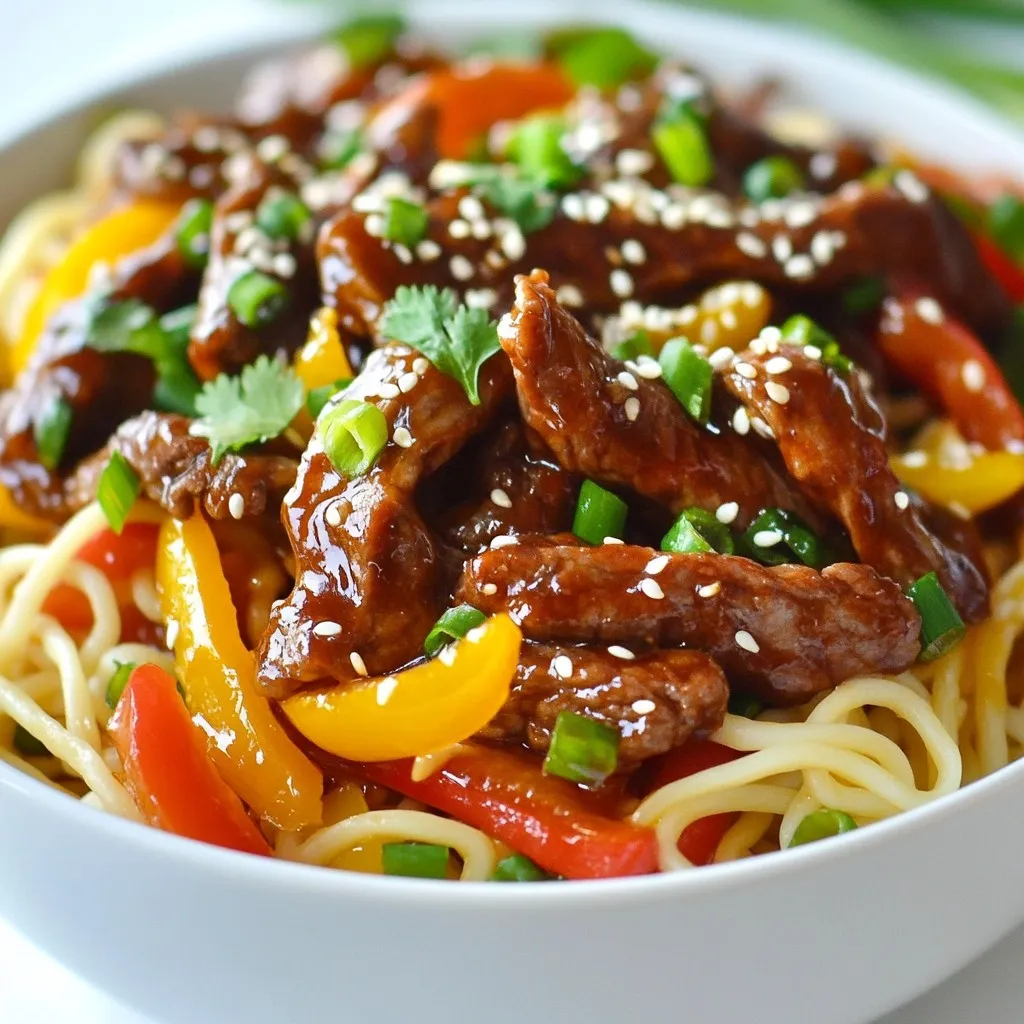
Looking for a tasty dinner that’s quick and satisfying? You’re in the right place! This Mongolian Beef Noodles recipe is easy to follow and packed with flavor. I’ll guide you step-by-step, so you can impress your family or friends. Whether you’re a seasoned cook or a beginner, you’ll find tips and tricks to make this dish your own. Let’s dive into this delicious, savory meal that you’ll want to make again and again!
Why I Love This Recipe
- Quick and Easy: This recipe is perfect for busy weeknights, taking only 30 minutes from start to finish.
- Flavorful Ingredients: The combination of soy sauce, brown sugar, and sesame oil creates a rich and savory sauce that perfectly coats the noodles.
- Customizable: You can easily adjust the spice level and add your favorite vegetables to suit your taste.
- Family-Friendly: This dish is a hit with both kids and adults, making it a great choice for family dinners.
Ingredients
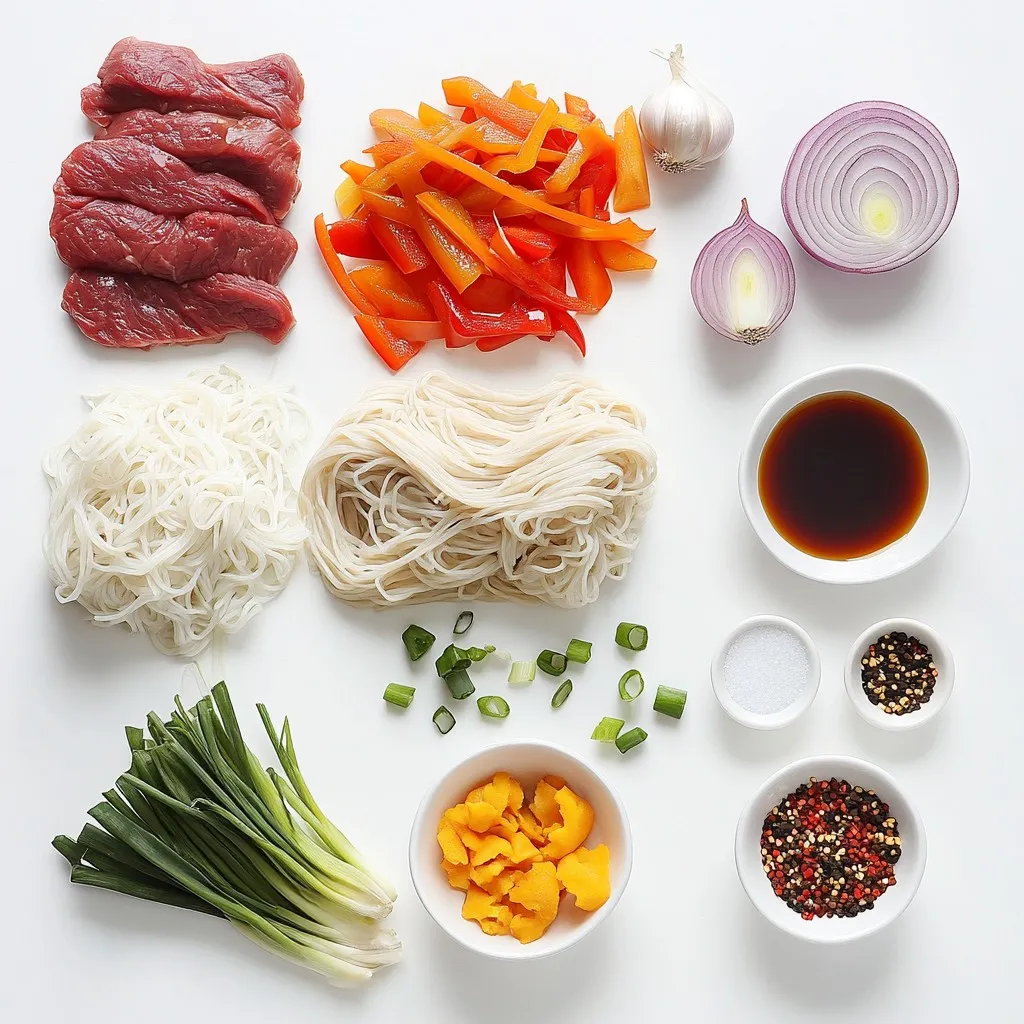
Main Ingredients for Mongolian Beef Noodles
– 8 oz rice noodles
– 1 lb flank steak, thinly sliced against the grain
– 1 tablespoon cornstarch
– 2 tablespoons vegetable oil
– 1 onion, thinly sliced
– 3 cloves garlic, minced
– 1 inch fresh ginger, finely grated
– 1 bell pepper, thinly sliced
– 3 green onions, chopped into 1-inch pieces
– 1/4 cup soy sauce
– 2 tablespoons brown sugar
– 1 tablespoon sesame oil
– 1 teaspoon red pepper flakes (optional)
– Salt and pepper to taste
Optional Ingredients for Customization
You can add more veggies to your dish. Try mushrooms or broccoli for extra crunch. If you like heat, toss in more red pepper flakes. For a hint of sweetness, add more brown sugar. You can also experiment with different bell peppers. Red adds sweetness, green has a nice bite.
Recommended Tools and Equipment
– Large skillet or wok
– Medium bowl
– Cooking utensils (spatula, tongs)
– Knife and cutting board
– Measuring spoons and cups
– Colander for draining noodles
These tools will make your cooking process easier. Having them ready helps you focus on making a great meal. Enjoy the fun of cooking Mongolian Beef Noodles!
Step-by-Step Instructions
Preparing the Rice Noodles
First, cook the rice noodles. Follow the package instructions. Once done, drain them well. This step keeps them from sticking together.
Cooking the Beef with Cornstarch
Next, take the flank steak and slice it thinly. Make sure to cut against the grain. In a bowl, mix the beef with cornstarch. Toss well until it coats the meat evenly. This helps the beef get a nice crisp when you cook it.
Heat vegetable oil in a large skillet or wok over high heat. When the oil is hot, add the beef in a single layer. Sear for 2-3 minutes without moving it. This forms a lovely brown crust. Flip the beef and cook for another 2 minutes. Once done, transfer the beef to a plate and set it aside.
Combining Aromatics and Vegetables
In the same skillet, lower the heat a bit. Add sliced onion, minced garlic, and grated ginger. Stir-fry these for 1-2 minutes. You want them fragrant and the onions softening.
Now, add the sliced bell pepper. Stir-fry for another 2-3 minutes. The pepper should be tender but still crisp. This adds color and crunch to your dish.
Final Assembly of Mongolian Beef Noodles
Return the cooked beef to the skillet. Add chopped green onions next. Pour in soy sauce, sprinkle brown sugar, and drizzle sesame oil. If you like spice, add red pepper flakes. Stir everything together. Make sure the beef and veggies are well coated.
Finally, gently add the cooked rice noodles. Toss all the ingredients together in the sauce. Stir-fry for an extra 2-3 minutes. This ensures everything is well mixed and heated through. Taste and season with salt and pepper as needed. Adjust with more brown sugar or soy sauce if you like it sweeter or saltier. Enjoy your delicious Mongolian Beef Noodles!
Tips & Tricks
Achieving the Perfect Texture for Beef
To get the best beef texture, start with flank steak. Slice it thinly against the grain. This helps the meat stay tender. Then, coat the beef in cornstarch. This gives it a crispy finish when you cook it. Make sure your skillet is hot before adding the beef. Sear it without moving for a nice brown crust.
Enhancing Flavor with Marinades
A good marinade can boost flavor. For a simple one, mix soy sauce and brown sugar. Add some garlic and ginger for a deeper taste. Let the beef marinate for at least 15 minutes. This step is key to making the meat flavorful. You can also add sesame oil for a nutty touch.
Common Mistakes to Avoid
One mistake is overcrowding the pan. If you add too much beef, it stews instead of sears. Cook in batches to avoid this. Another error is not seasoning well. Always taste and adjust salt and sugar. Lastly, don’t skip the green onions. They add freshness and crunch.
Pro Tips
- Choose the Right Cut: Flank steak is ideal for this recipe due to its flavor and tenderness when sliced against the grain. Ensure you don’t overcook it to maintain its juiciness.
- Perfecting the Noodles: Rinse the cooked rice noodles under cold water after draining to prevent them from sticking together. This step is crucial for achieving that perfect stir-fry texture.
- Adjusting Spice Levels: If you’re sensitive to spice, start with a smaller amount of red pepper flakes. You can always add more to the dish later, but it’s hard to tone down the heat once it’s in!
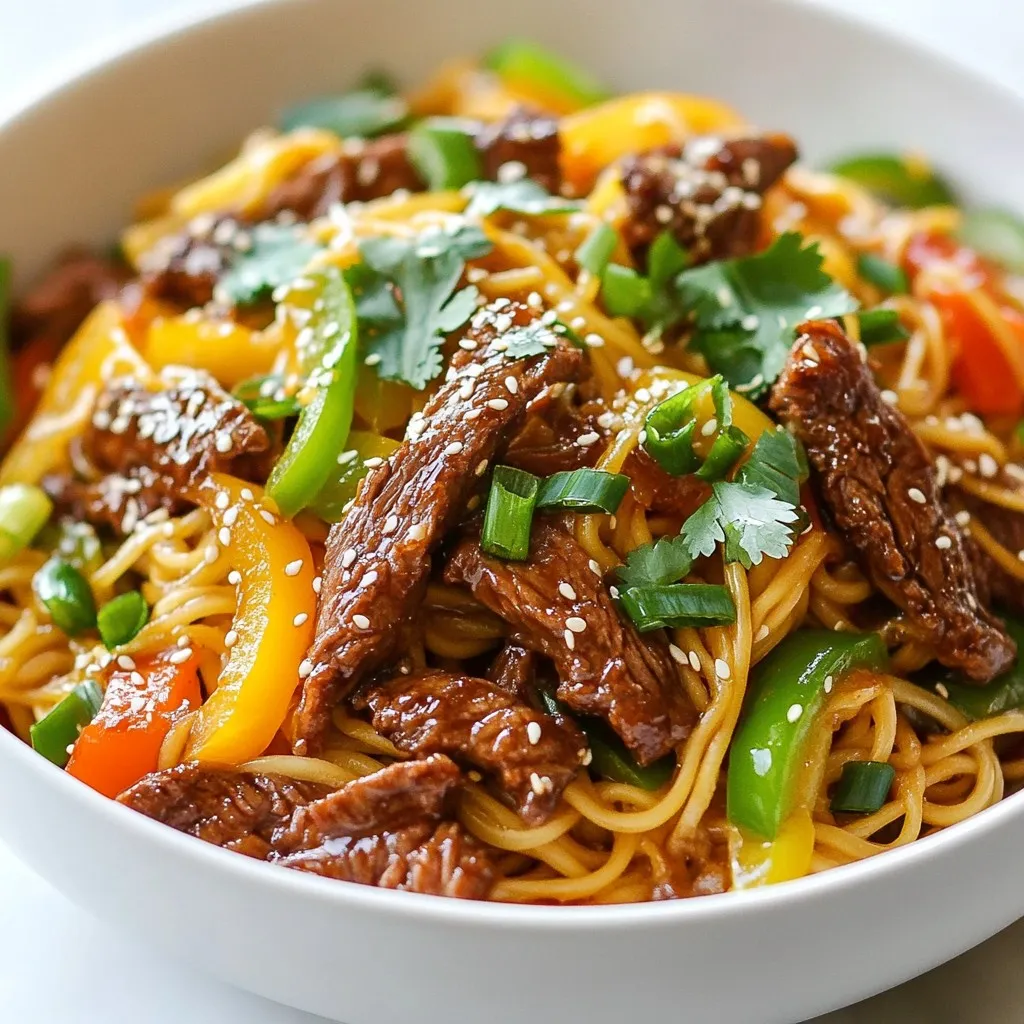
- Garnish Wisely: For an extra burst of flavor and crunch, consider garnishing with toasted sesame seeds and fresh cilantro. This not only enhances the dish visually but also adds depth to its flavor profile.
Variations
Vegetarian or Vegan Adaptations
To make Mongolian Beef Noodles vegetarian or vegan, swap the beef. Use tofu or tempeh instead. Press and cube the tofu for best results. Marinate it in soy sauce and cornstarch. This gives a similar texture when cooked. You can also add mushrooms for a meaty flavor. Use the same cooking steps, and enjoy a tasty plant-based meal.
Spicy Version with Additional Heat
If you love spice, add more heat to your dish. Start by increasing the red pepper flakes. You can also add fresh chili peppers. Slice them thin and toss them in with the onions. For extra flavor, try a splash of sriracha or chili oil. Adjust the spice to your liking. This spicy twist will surely excite your taste buds.
Alternative Noodle Types for Different Flavors
While rice noodles are traditional, feel free to experiment. Try egg noodles for a richer taste. Udon noodles provide a thick, chewy bite. Soba noodles offer a nutty flavor and are a great option too. Each type of noodle changes the dish’s character. Cook according to the package instructions for the best results.
Storage Info
How to Store Leftovers Properly
To keep your Mongolian Beef Noodles fresh, let leftovers cool first. Place them in an airtight container. This helps prevent any moisture loss or spoilage. Store the noodles in the fridge for up to three days. If you see any signs of spoilage, like a bad smell or changed color, throw it away.
Reheating Mongolian Beef Noodles
When you’re ready to enjoy your leftovers, you can easily reheat them. Use a skillet over medium heat. Add a splash of water or broth to keep the noodles moist. Stir gently for about five minutes. This warms the dish evenly. You can also microwave them in short intervals. Cover with a damp paper towel to keep the noodles from drying out.
Freezing Tips for Extended Use
If you want to save your Mongolian Beef Noodles for a longer time, freezing is a great option. Allow the dish to cool completely before packing. Use a freezer-safe container or heavy-duty freezer bags. Try to remove as much air as possible to prevent freezer burn. Label the container with the date. You can freeze them for up to three months. When ready to eat, thaw overnight in the fridge before reheating.
FAQs
What is the origin of Mongolian Beef Noodles?
Mongolian Beef Noodles come from Chinese cuisine. They mix Mongolian flavors with noodles. This dish isn’t really from Mongolia. Instead, it is popular in Chinese restaurants. The dish uses soy sauce, beef, and noodles. It is tasty and satisfying.
Can I use a different cut of meat?
Yes, you can use other cuts of meat. Sirloin or ribeye work well too. If you like chicken, try chicken breast instead. Just slice it thinly. Cook it the same way as flank steak. This gives you different flavors and textures.
How can I make this dish gluten-free?
To make Mongolian Beef Noodles gluten-free, use rice noodles. They are safe for gluten-free diets. Check the soy sauce label; use gluten-free soy sauce. You can also use tamari instead. This will keep the flavors rich without gluten.
What side dishes pair well with Mongolian Beef Noodles?
Mongolian Beef Noodles pair well with simple sides. You can serve steamed broccoli or bok choy. These add a nice crunch and color. Fried rice is another good option. It complements the noodles and beef well. For a refreshing touch, try a light cucumber salad.
Mongolian beef noodles use simple ingredients and easy steps to create a tasty dish. You learned how to prepare the noodles, cook the beef, and add tasty veggies. Remember, customization allows you to impress with unique flavors. Pay attention to tips and avoid common mistakes. Store and reheat leftovers for future meals. Embrace the joy of cooking with this dish. You can make it your own while enjoying great flavors. Dive in and savor every bit
Mongolian Beef Noodles
A delicious fusion of tender beef, colorful vegetables, and rice noodles in a savory sauce.
Course Main Course
Cuisine Asian
Servings 4
Calories 450 kcal
- 8 oz rice noodles
- 1 lb flank steak, thinly sliced against the grain
- 1 tablespoon cornstarch
- 2 tablespoons vegetable oil
- 1 onion thinly sliced
- 3 cloves garlic, minced
- 1 inch fresh ginger, finely grated
- 1 bell pepper thinly sliced (red or green)
- 3 green onions chopped into 1-inch pieces
- 1/4 cup soy sauce (preferably low sodium)
- 2 tablespoons brown sugar (or to taste)
- 1 tablespoon sesame oil
- 1 teaspoon red pepper flakes (optional)
- to taste salt and pepper
Start by cooking the rice noodles according to the package instructions. Once cooked, drain them well and set aside to prevent sticking.
In a medium bowl, combine the thinly sliced flank steak with the cornstarch. Toss until the beef is evenly coated.
Heat the vegetable oil in a large skillet or wok over high heat. When the oil is shimmering, carefully add the beef in a single layer. Sear for 2-3 minutes without moving it, then flip and cook for an additional 2 minutes. Transfer the beef to a plate and set aside.
In the same skillet, reduce the heat slightly, and add the sliced onion, minced garlic, and grated ginger. Stir-fry for 1-2 minutes until fragrant.
Add the sliced bell pepper to the skillet. Stir-fry for another 2-3 minutes until the bell pepper is tender but still slightly crisp.
Return the cooked beef to the skillet along with the chopped green onions. Pour in the soy sauce, sprinkle the brown sugar, drizzle the sesame oil, and add the red pepper flakes if desired. Stir everything together.
Gently add the cooked rice noodles to the skillet, tossing everything together in the sauce. Stir-fry for an additional 2-3 minutes.
Taste the dish and season with salt and pepper as needed. Adjust sweetness or saltiness by adding more brown sugar or soy sauce.
Present in large bowls and garnish with green onions and sesame seeds.
Keyword Asian cuisine, beef, noodles, stir-fry
WANT TO SAVE THIS RECIPE?